Mission Statement
EquiPhysics is a math and engineering nonprofit inspired by horses. We want quantitative fields to feel welcoming to people who love animals, and we want better, less invasive ways to answer questions about horse health.
The idea is simple. Math courses have always taught through examples: airplanes, bridges, falling objects. Horses can carry the same lessons, from mechanics to differential equations to statistics, for students who would never pick up a book about rockets but will happily spend an hour on how a horse’s heart works. The goal, from the start: bring horse lovers to mathematics.
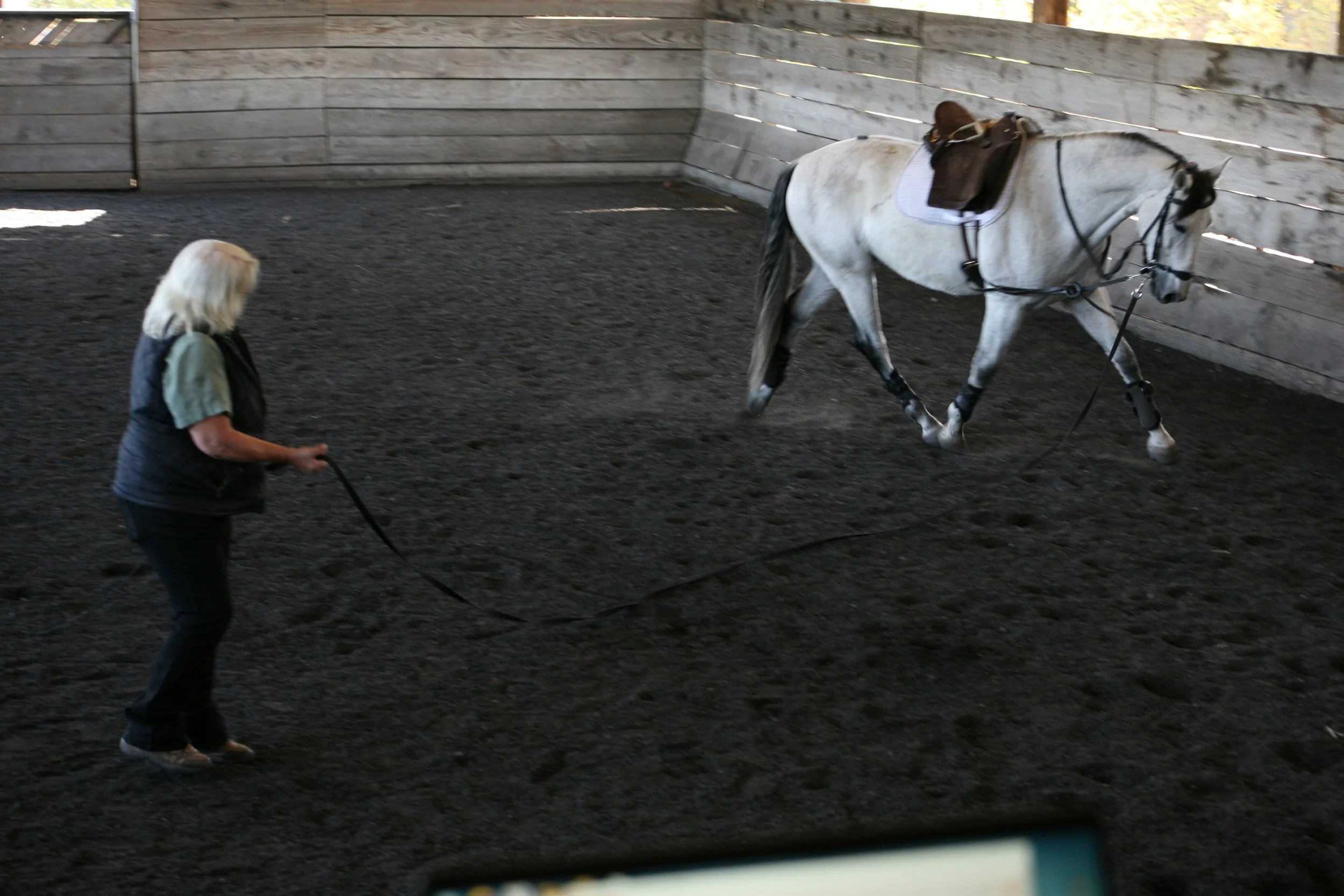
I’m not a veterinarian, horse trainer, or riding instructor. I’m a mathematician who has worked with horses since I was eight years old. For most of my career I studied how animals move and how fluids flow through bodies. EquiPhysics is where those two lives finally meet.
Laura Miller, founder
Our Story
Our team has spent decades around animal movement science, equine-assisted services, mathematics, and horses themselves. In 2023 we started the Systems Biomechanics of the Horse program at the University of Arizona. In 2025 EquiPhysics became an independent nonprofit so the work could outlast any one university, and in 2026 we received federal 501(c)(3) recognition.
Our first years at the Al-Marah Equine Center in Tucson were a time of trying many things quickly: horsemanship and movement courses, undergraduate research, community symposia, and sensor studies with our own horses. That taught us what mattered most: the classroom examples, the datasets, the models, and the students they reached. We owe warm thanks to the community that made those years what they were, especially Nancy Skocy, whose wisdom in equine-assisted services shaped the program’s early life.
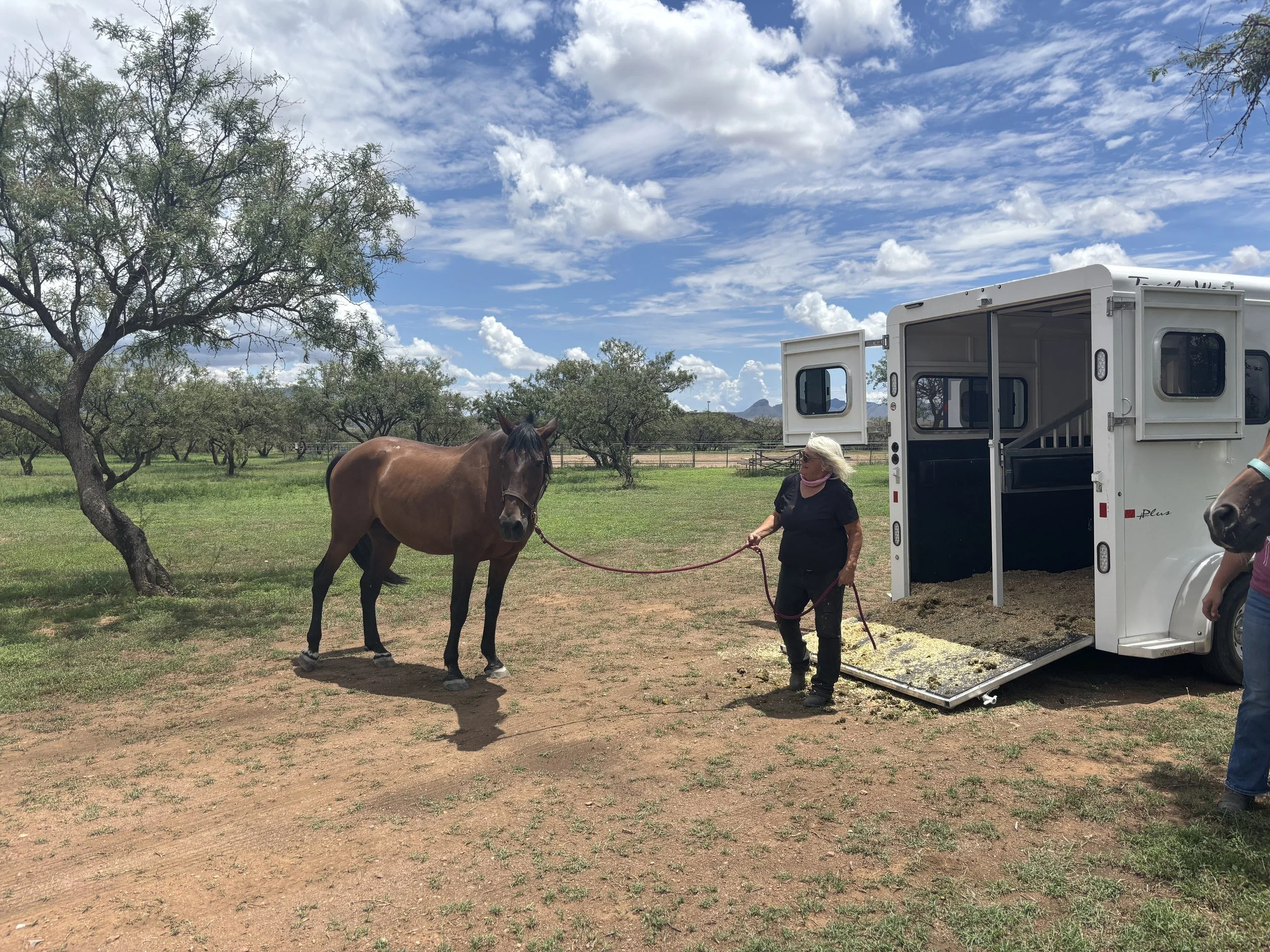
When the university announced the sale of Al-Marah in 2026, the horses and the program moved to Rancho del Nido in Sonoita, an inspected partner facility. It was a tremendous amount of work, and a lot of people showed up with trucks, trailers, and time. The move also sharpened our focus. Today EquiPhysics is built around what we learned works best: horse-centered math education that any student can join from any classroom, and computational research that serves horse health.
We still share our days with horses. The herd lives at Rancho del Nido, and the gentle measurements we take during ordinary handling and exercise are where every dataset and model begins. Their welfare comes first. Measurements are brief and noninvasive, with lightweight motion sensors and the same heart-rate straps riders wear every day, under university-approved animal-care protocols. Our long-term goal is to need those measurements less and less as the computer models take on more of the work.
EquiPhysics is governed by a volunteer board: Christina Hamlet, Siobhan Watkins, and Laura Miller.
We also know what our expertise is and isn’t. EquiPhysics brings mathematics, engineering, and data. The veterinarians, trainers, farriers, and horsepeople we work with bring everything else, and the most interesting questions sit right at that meeting point: when do measurement and experienced observation notice the same things, and when does each notice what the other can’t?
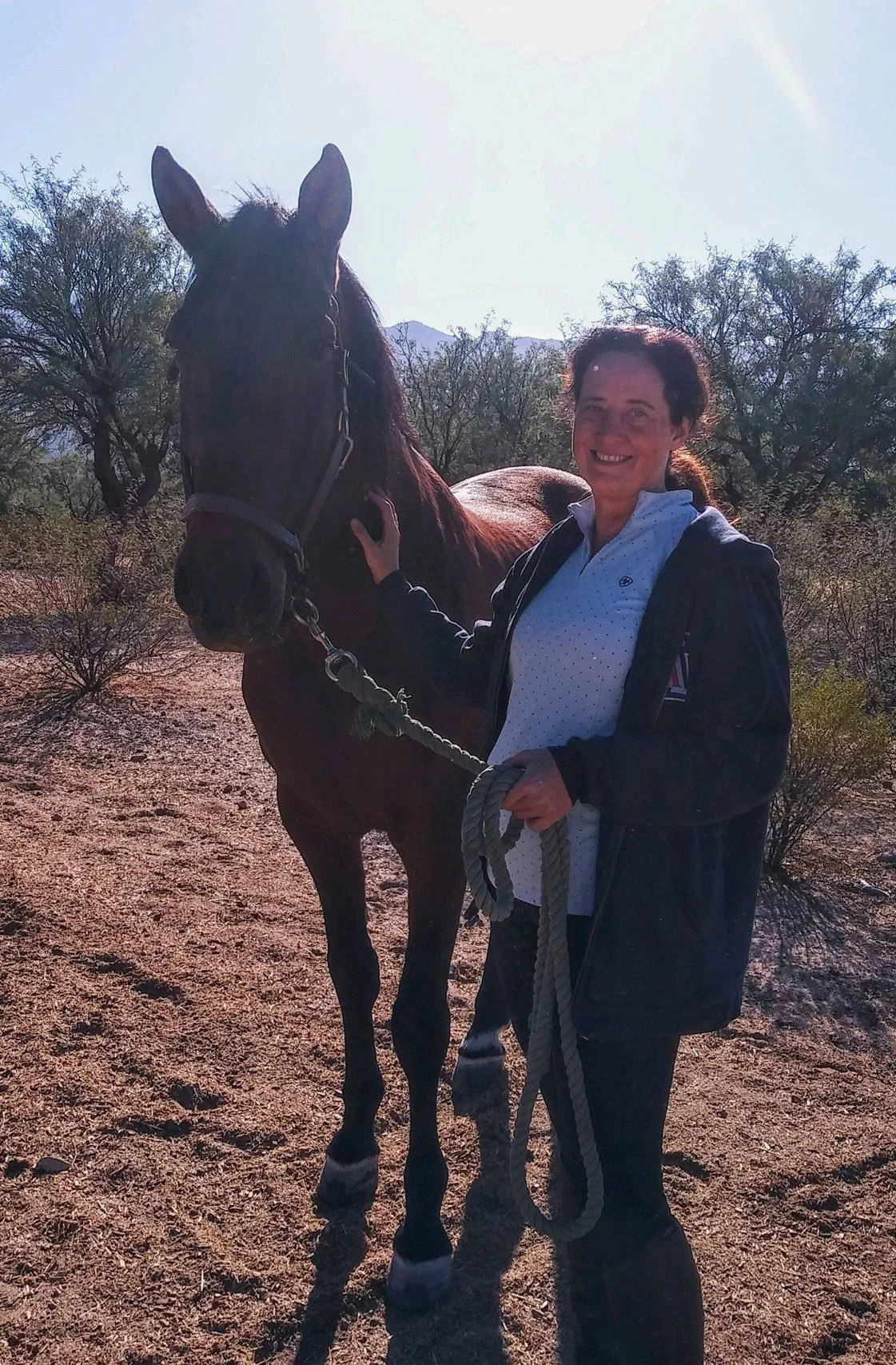
Laura and Duque, standing together in the desert.
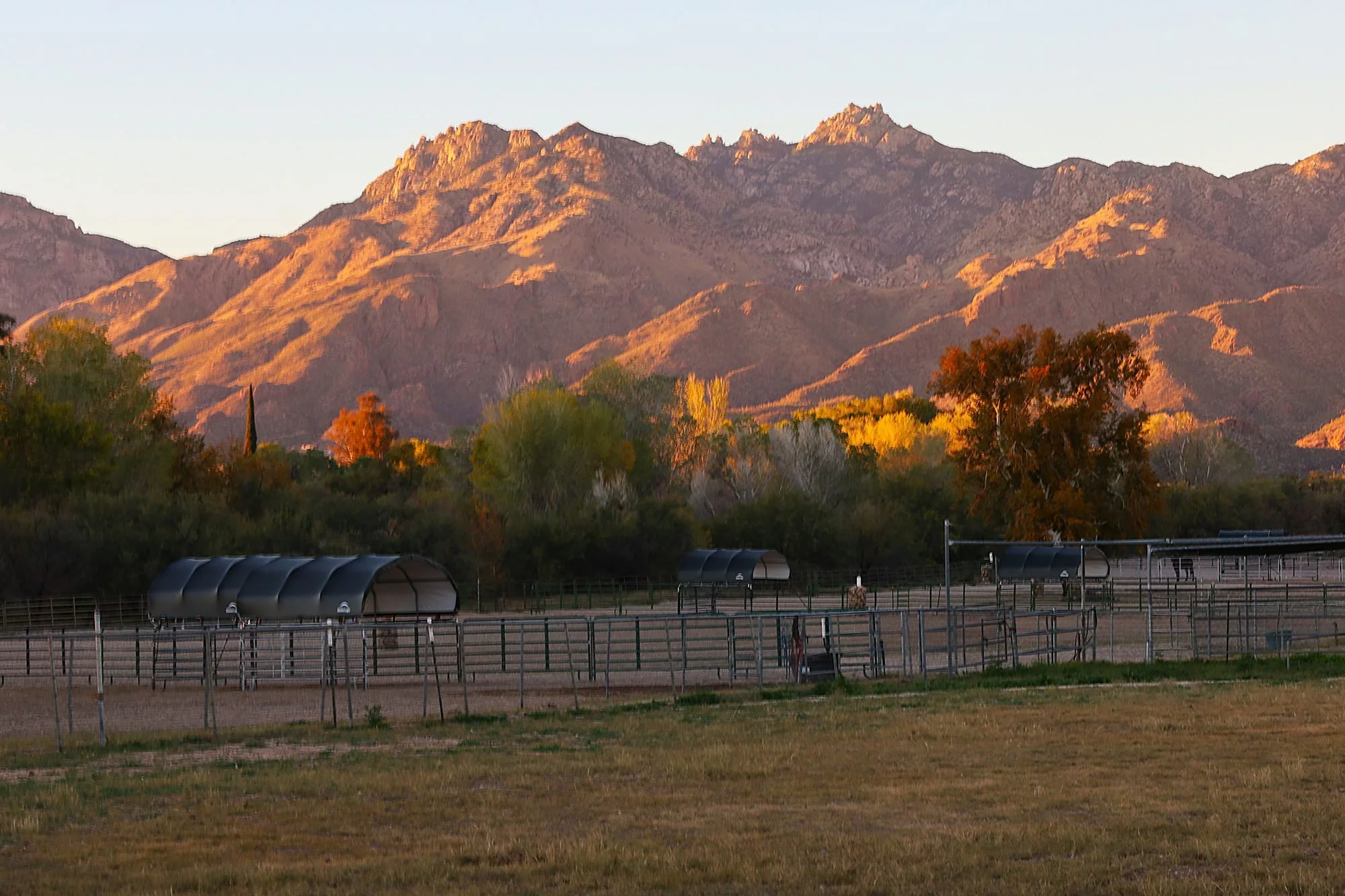
Sunset over the paddocks at the Al-Marah Equine Center, our home until 2026.
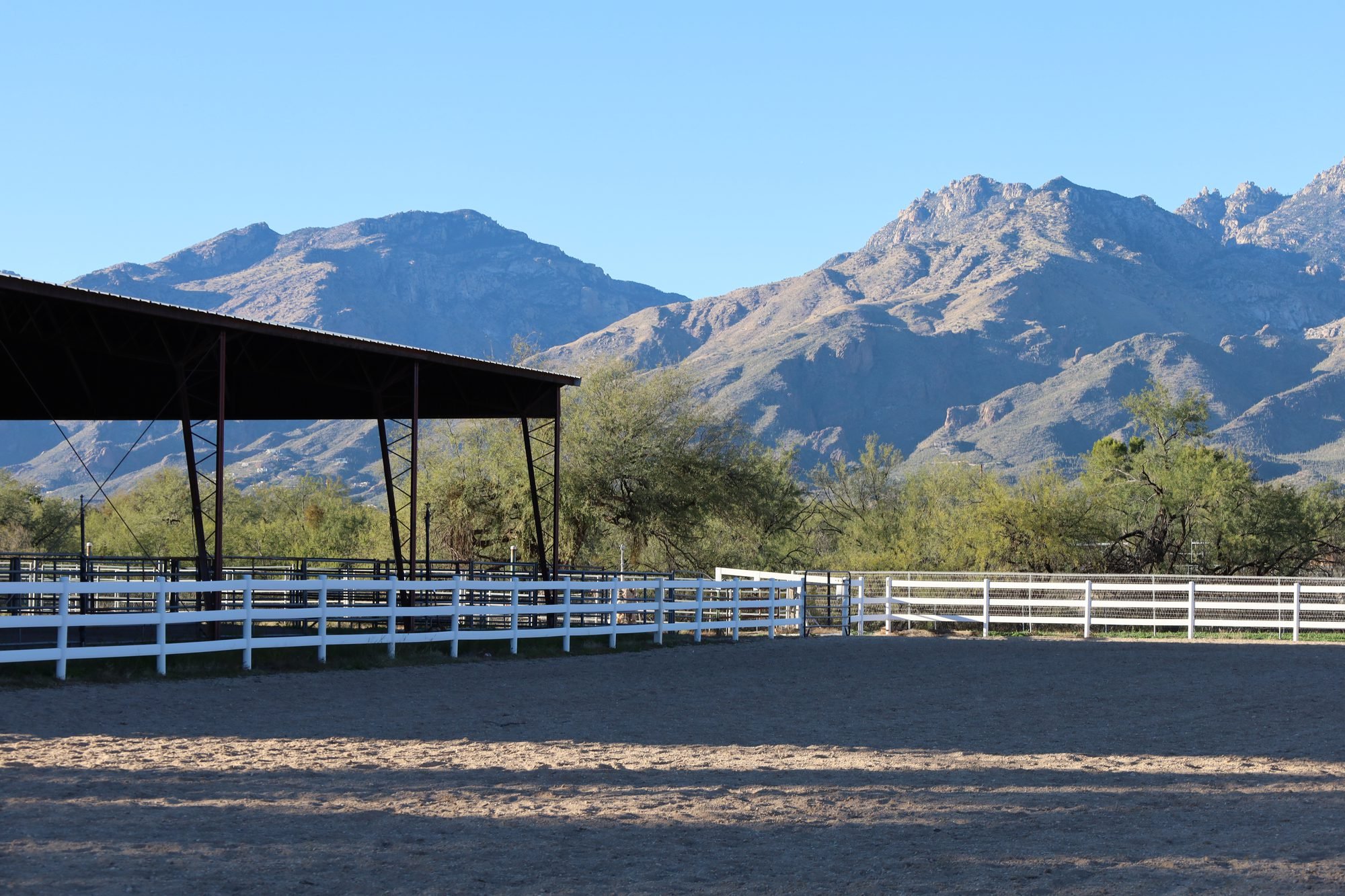
The arenas at the Al-Marah Equine Center, where our gait and heart-rate work began.
-
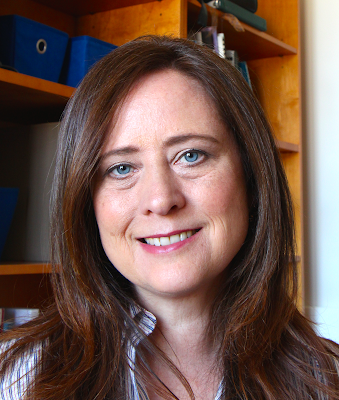
Laura Miller, PhD
FOUNDER, MATH ZOOLOGIST
-
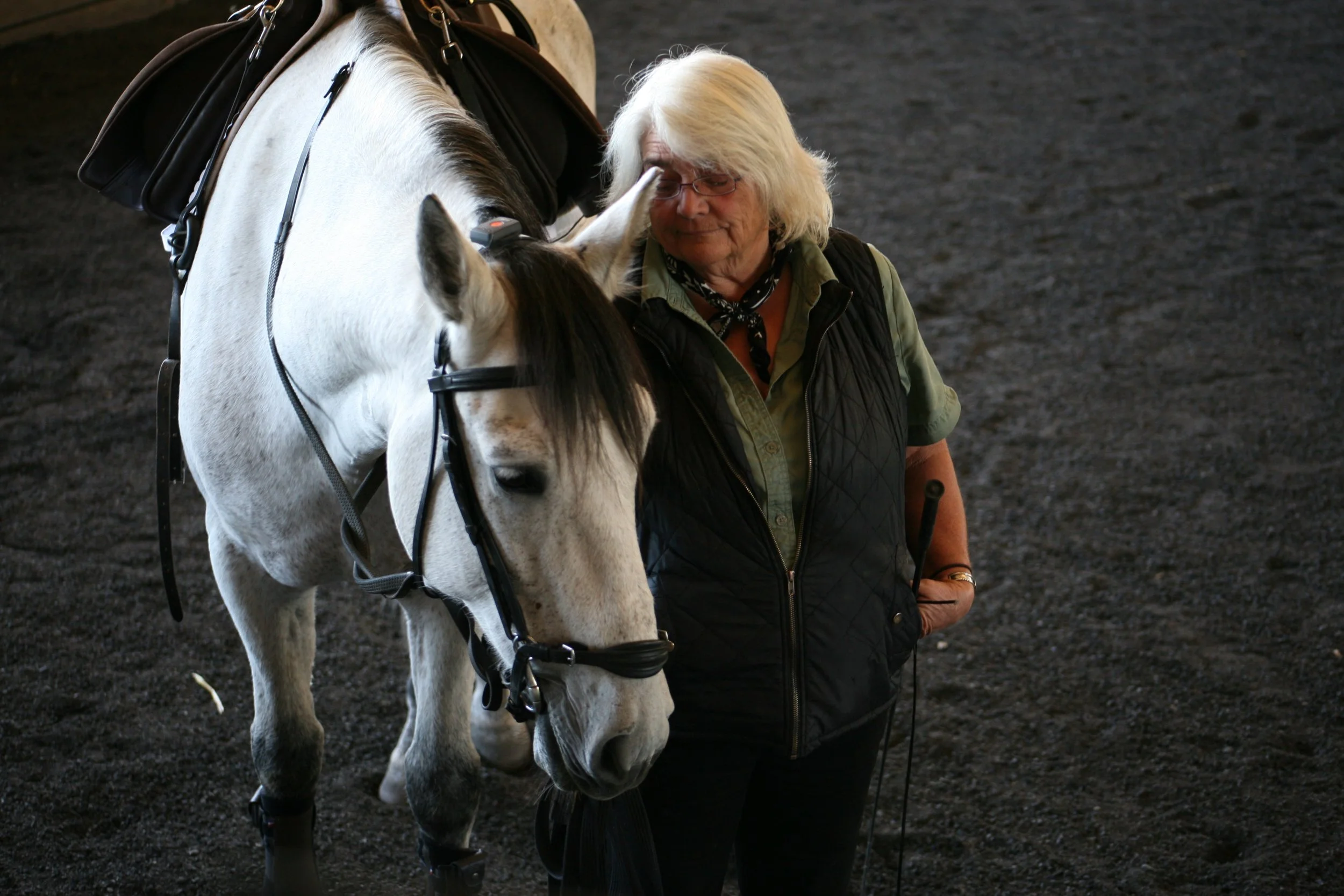
Bernadette Genua
Horse Trainer and Barn Manager
Contact us
Interested in working together? Send us a message and we will be in touch shortly. We can’t wait to hear from you!